
Advocating for Stronger Survivor Protections in Maryland
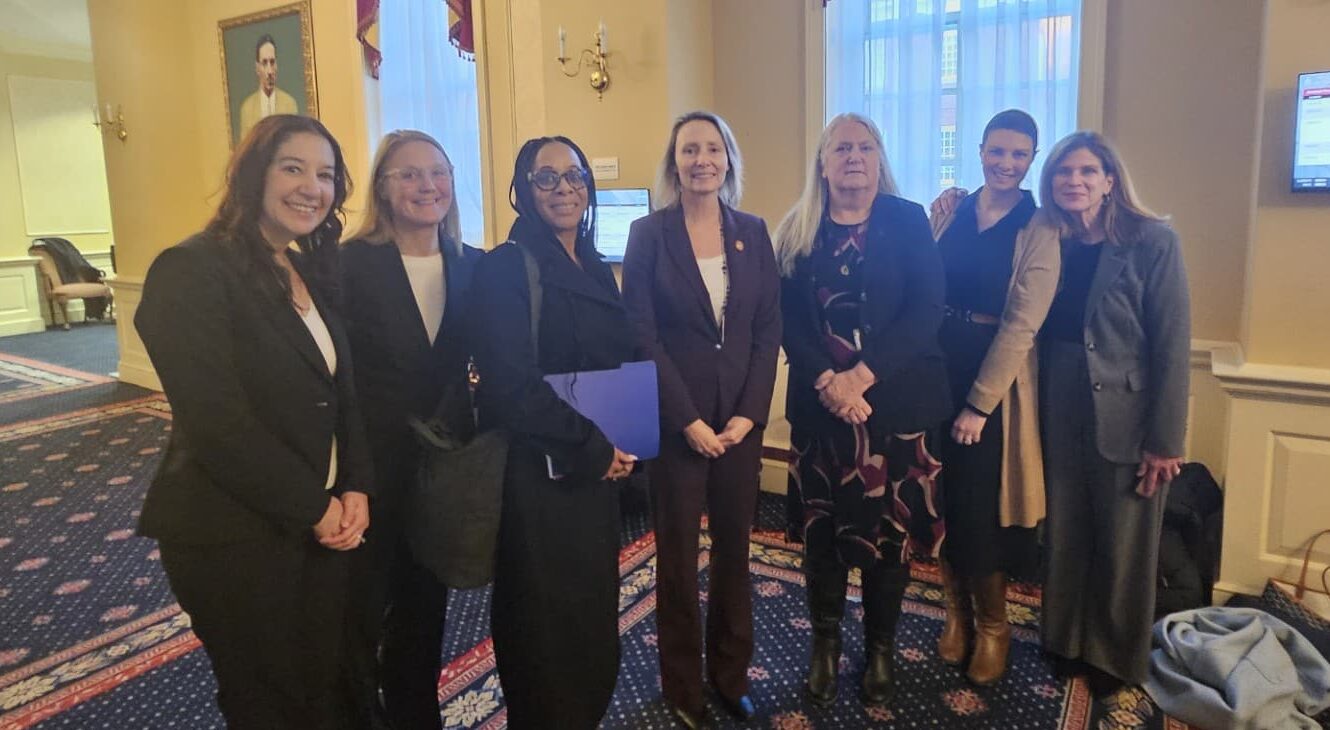
Yesterday marked an important milestone in Volunteer Legal Advocates’ expansion into Maryland: the opportunity to weigh in on Maryland judicial policy and advocate directly for survivors in the legislative process.
Our Executive Director, Sara Tennen, and Managing Attorney, Robyn Swanson, testified before Maryland’s Judicial Proceedings Committee in support of Senate Bill 433, introduced by Senator Sara Love. We are grateful to Sen. Love for prioritizing the safety and stability of survivors and for advancing practical reforms that strengthen Maryland’s protective order law. SB 433 would improve the law in two critical ways.
Providing Survivors More Time to Stabilize
First, the bill would extend the time between a temporary protective order (TPO) and the final protective order hearing from seven days to fourteen.
The days immediately following the issuance of a temporary order are often chaotic and overwhelming. Survivors may be securing safe housing, arranging childcare, taking time off work, and addressing urgent safety concerns—all while preparing for a court hearing that can have life-altering consequences.
Expanding the timeline to fourteen days provides much-needed breathing room. It increases survivors’ ability to obtain pro bono legal representation, allows for more meaningful case preparation, and supports trauma-informed court proceedings. Ultimately, this change would lead to clearer records and stronger, more durable protective orders.
Ensuring Meaningful Financial Relief
Second, SB 433 clarifies that courts may order reimbursement for losses or expenses resulting from abuse.
Although current law includes broad language that arguably permits this kind of relief, reimbursement is rarely awarded in practice. According to the Administrative Office of the Courts, of the 801 protective orders granted statewide in January 2026, only three included orders for “other costs” beyond emergency family maintenance—less than half of one percent.
For survivors, access to timely financial relief can be critical to safety and stability. Reimbursement can mean replacing a broken phone, repairing property damage, covering emergency expenses, or addressing other immediate needs without waiting months for a divorce hearing or pursuing separate legal action. By clearly enumerating the types of monetary relief available, SB 433 makes it more likely that survivors will request reimbursement—and that courts will grant it.
A Survivor-Centered Step Forward
SB 433 represents a practical, thoughtful reform grounded in the realities survivors face. It strengthens protections, promotes fairness, and expands access to justice. We are proud to support this legislation and policies that better serve survivors across Maryland. As we continue our work in the state, we remain committed not only to providing high-quality pro bono representation but also to advocating for systemic change that helps end the cycle of violence.